
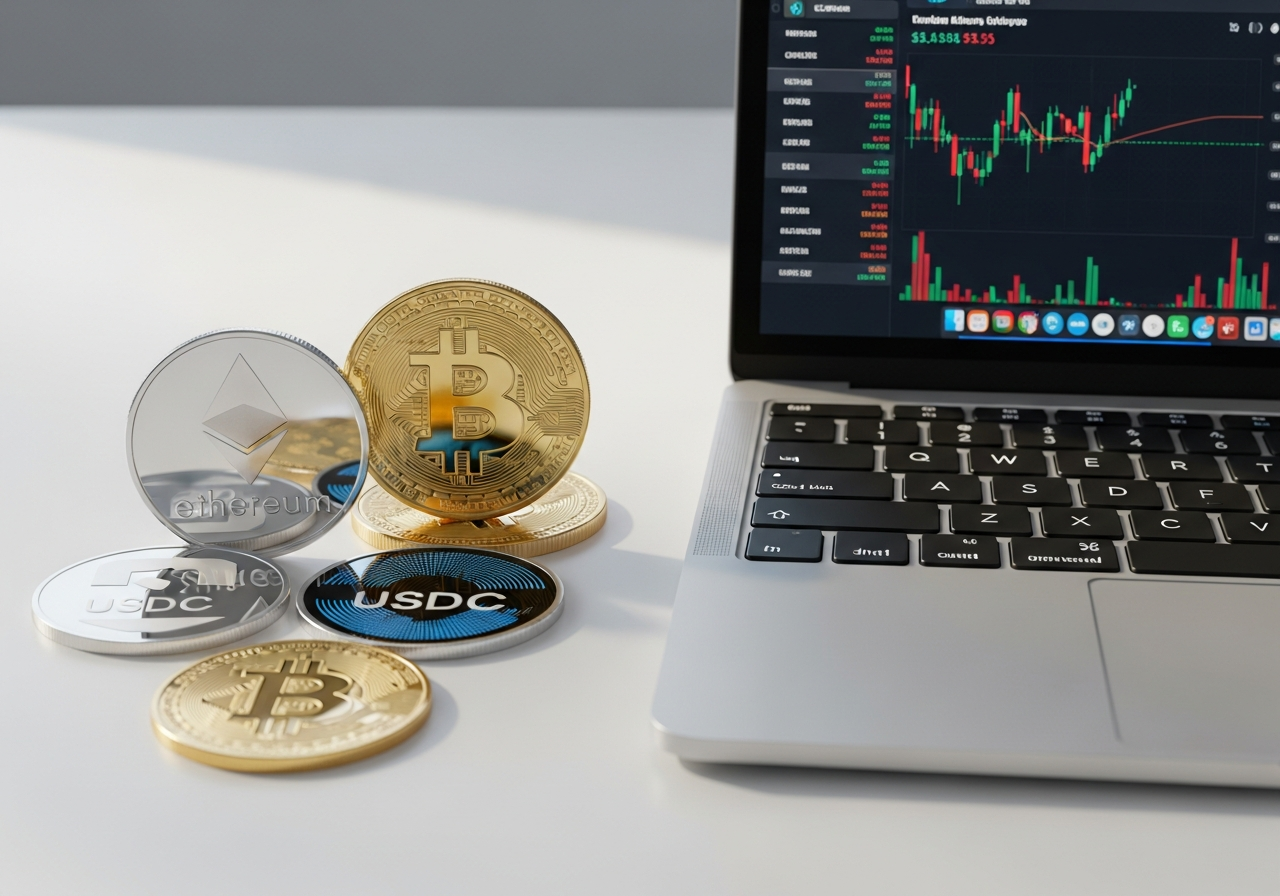
USDC has emerged as one of the most stable and widely-used cryptocurrencies, but many holders eventually need to convert their USDC holdings to other digital assets like Bitcoin, Ethereum, or alternative cryptocurrencies. While USDC provides excellent stability for preserving value, the conversion process carries significant risks including scams, network errors, and unexpected fees that can cost you money or result in lost funds.
The cryptocurrency landscape offers multiple methods for safely converting USDC, including centralized exchanges (CEX), decentralized exchanges (DEX), and aggregator platforms. Popular conversion platforms like Binance, MoonPay, Swapzone, ChangeNOW, and Kraken each offer different advantages in terms of fees, security features, and supported trading pairs. Understanding these options and their associated risks is crucial for executing successful USDC conversions while protecting your assets.
What is USDC and Why Convert It?
USD Coin (USDC) is a fully-backed US dollar stablecoin that maintains a 1:1 peg with the US dollar through regular audits and reserves held by regulated financial institutions. While USDC provides excellent price stability and serves as a reliable store of value during volatile market conditions, many cryptocurrency investors choose to convert their USDC holdings to other digital assets for various strategic reasons.
The primary motivations for converting USDC include capitalizing on potential price appreciation of cryptocurrencies like Bitcoin and Ethereum, diversifying portfolio holdings across different blockchain networks, and accessing specific DeFi protocols that may not support USDC directly. Additionally, some investors convert USDC to avoid the risks associated with holding stablecoins long-term, such as regulatory uncertainty, issuer risk, or the opportunity cost of missing out on potential gains from appreciating cryptocurrencies.
However, holding stablecoins like USDC also carries inherent risks that prompt conversions, including potential depegging events, regulatory crackdowns on stablecoin issuers, and the centralized nature of USDC reserves which creates counterparty risk. Smart investors often convert portions of their USDC holdings to decentralized cryptocurrencies to mitigate these risks while maintaining some stable value exposure.
USDC Network Compatibility
USDC operates across multiple blockchain networks, each offering different advantages in terms of transaction speed, costs, and ecosystem compatibility. Understanding these network differences is crucial for successful conversions and avoiding costly mistakes.
- Ethereum Network – The original USDC implementation with the highest liquidity and widest platform support, though it typically involves higher gas fees
- Polygon (MATIC) – Offers significantly lower transaction fees and faster confirmation times while maintaining Ethereum compatibility
- Solana – Provides extremely fast transactions with minimal fees, making it ideal for frequent trading and smaller conversion amounts
- Tron (TRC-20) – Features very low transaction costs and is widely supported by exchanges, particularly popular in Asian markets
- Binance Smart Chain (BSC) – Offers low fees and fast transactions with extensive DeFi protocol integration
- Avalanche – Provides fast finality and low costs while supporting complex DeFi applications and cross-chain functionality
Network selection errors represent one of the most common and costly mistakes in USDC conversions, as sending USDC on the wrong network can result in permanent loss of funds. Always verify that both your sending and receiving platforms support the same network before initiating any conversion.
Common Conversion Targets
Bitcoin (BTC) remains the most popular conversion target for USDC holders seeking exposure to the flagship cryptocurrency’s potential for long-term appreciation and portfolio diversification. Ethereum (ETH) represents another highly sought-after conversion option, particularly for users planning to participate in DeFi protocols, NFT markets, or staking opportunities within the Ethereum ecosystem.
Other popular conversion targets include USDT for users who prefer Tether’s broader exchange support, major altcoins like Cardano (ADA), Solana (SOL), and Polygon (MATIC) for specific blockchain ecosystem exposure, and emerging cryptocurrencies that offer unique utility or investment potential. The USDC to BTC and USDC to ETH trading pairs typically offer the highest liquidity and most competitive rates across all major platforms.
Safety Risks in USDC Conversions
Converting USDC to other cryptocurrencies involves multiple security risks that can result in significant financial losses if not properly addressed. Understanding these risks and implementing appropriate safeguards is essential for protecting your digital assets during the conversion process.
- Phishing scams and fake platforms that steal login credentials and private keys through convincing website replicas
- Smart contract vulnerabilities in decentralized exchanges that can be exploited to drain user funds
- Price slippage during volatile market conditions that can significantly reduce the value received from conversions
- High network fees and hidden platform charges that substantially impact conversion profitability
- Irreversible transaction errors including wrong wallet addresses and incorrect network selections
- Man-in-the-middle attacks that intercept and redirect transactions to attacker-controlled addresses
- Exchange exit scams where platforms suddenly cease operations and disappear with user funds
How to Spot and Avoid Scams
Protecting yourself from cryptocurrency scams requires vigilance and adherence to proven security practices that can prevent the majority of common attack vectors. Always verify website URLs carefully by typing them directly into your browser rather than clicking links from emails or messages, as scammers frequently create convincing replicas of legitimate platforms with subtle URL variations.
Use official mobile applications downloaded directly from App Store or Google Play Store rather than third-party sources, and enable two-factor authentication (2FA) on all cryptocurrency accounts using authenticator apps rather than SMS when possible. Be especially wary of unsolicited contact offering investment opportunities or urgent conversion needs, as legitimate platforms never pressure users into immediate action.
Verify platform legitimacy by checking regulatory registrations, user reviews from multiple sources, and ensuring the platform has a verifiable track record and transparent team information. When in doubt, start with small test transactions to verify that the platform functions correctly before committing larger amounts to conversion processes.
Top Platforms for Safe USDC Swaps
Selecting the right platform for USDC conversions requires careful evaluation of security features, fee structures, and regulatory compliance to ensure both safety and cost-effectiveness.
| Platform | Type | KYC Needed? | Fees | Supported Pairs | Security Features |
|---|---|---|---|---|---|
| Binance | CEX | Yes | 0.1% spot | 600+ | SAFU fund, 2FA, cold storage |
| MoonPay | Gateway | Partial | 1-4.5% | 100+ | SOC 2, PCI DSS compliance |
| Swapzone | Aggregator | No | 0.25-2% | 400+ | Non-custodial, rate comparison |
| ChangeNOW | Non-custodial | No | 0.25-0.5% | 500+ | No registration, SSL encryption |
| Kraken | CEX | Yes | 0.16-0.26% | 200+ | PoR audits, air-gapped storage |
| SimpleSwap | Exchange | Optional | 0.5% | 300+ | Fixed rates, API integration |
Centralized vs Decentralized Options
Centralized exchanges (CEX) like Binance and Kraken offer superior liquidity, faster execution speeds, and comprehensive customer support, making them ideal for larger conversion amounts and users who prioritize reliability over privacy. These platforms typically provide the tightest spreads and most competitive rates for popular trading pairs, though they require identity verification and maintain custody of user funds during the conversion process.
Decentralized exchanges (DEX) and non-custodial platforms prioritize user privacy and security by allowing direct wallet-to-wallet conversions without requiring identity verification or fund deposits. While DEX platforms may have higher slippage and less liquidity for certain trading pairs, they eliminate counterparty risk and provide users with complete control over their private keys throughout the conversion process.
Aggregator Benefits
- Compare rates across multiple exchanges simultaneously to identify the best available conversion rates for your specific trading pair and amount
- Access liquidity from numerous sources including centralized exchanges, DEX platforms, and market makers through a single interface
- Review and verify exchange provider credentials, user ratings, and transaction history before committing to any conversion
- Minimize time spent researching individual platforms while ensuring competitive rates and reliable service providers
- Benefit from aggregated security features and dispute resolution services when dealing with multiple exchange providers
Step-by-Step Guide: Binance Convert
- Log into your verified Binance account and navigate to the “Trade” menu, then select “Convert” from the dropdown options
- Choose USDC as your source currency and select your target cryptocurrency from the extensive list of supported digital assets
- Enter the amount of USDC you wish to convert or specify the quantity of target cryptocurrency you want to receive
- Select your preferred conversion mode: Instant Convert for immediate execution or Limit Convert for price-specific orders
- Review the conversion rate, estimated fees, and final amount you’ll receive before confirming the transaction details
- Click “Convert” to execute the transaction, and monitor the process through your account’s transaction history
- Verify that the converted cryptocurrency appears in your Binance wallet within the specified timeframe, typically within seconds
Binance Modes Explained
Binance Convert offers multiple execution modes designed to optimize conversion outcomes based on market conditions and user preferences. The Instant Convert mode provides immediate execution at current market rates with zero slippage protection, making it ideal for users who prioritize speed and certainty over potentially better rates that might be available with timing.
Limit Convert mode allows users to set specific price targets for their conversions, automatically executing when market conditions reach the desired rate within a specified timeframe. This approach can result in better conversion rates during volatile market conditions but carries the risk that the target price may not be reached, leaving the conversion unfulfilled.
The key benefit of Binance Convert is its zero slippage guarantee, which ensures users receive exactly the quoted conversion rate regardless of market movements during transaction processing. This feature provides significant advantages over traditional spot trading, particularly for larger conversion amounts that might otherwise experience substantial slippage on regular order books.
Cross-Chain Swaps with MoonPay
MoonPay facilitates cross-chain USDC conversions with competitive fees ranging from 1% to 4.5% depending on the target cryptocurrency and conversion amount, with minimum transaction limits typically starting at $30 and maximum limits varying by jurisdiction and verification level. The platform supports direct wallet integrations, allowing users to receive converted cryptocurrencies directly in their preferred wallet without intermediate transfers through centralized exchange accounts.
The conversion process through MoonPay typically involves selecting source and target cryptocurrencies, connecting your preferred wallet, and completing identity verification for larger transaction amounts. Users benefit from transparent fee structures displayed before transaction confirmation, though it’s important to account for network fees that may apply to the final transfer to your designated wallet address.
Supported Wallets
- Ledger hardware wallets for maximum security when converting larger USDC amounts to long-term holding cryptocurrencies
- Trust Wallet mobile application with native MoonPay integration for convenient smartphone-based conversions
- Exodus desktop and mobile wallets offering built-in exchange features powered by MoonPay’s conversion engine
- MetaMask browser extension and mobile app for Ethereum-based conversions and DeFi protocol integration
- Coinbase Wallet for users who prefer non-custodial storage with major exchange ecosystem connectivity
- Phantom wallet for Solana-based USDC conversions and SPL token ecosystem access
Transaction Timeline
MoonPay conversions typically complete within 10-30 minutes for most cryptocurrency pairs, though cross-chain swaps may require additional confirmation time depending on network congestion and security requirements. Bitcoin conversions generally take 15-45 minutes due to block confirmation requirements, while Ethereum-based conversions can complete in 5-15 minutes during normal network conditions.
During periods of high network activity or market volatility, conversion times may extend to several hours, particularly for conversions involving newer or less liquid cryptocurrencies. Users receive email notifications and can track conversion progress through MoonPay’s transaction monitoring system, which provides real-time updates on transaction status and estimated completion times.
Using Aggregators like Swapzone
| Step | Details | Safety Tip |
|---|---|---|
| Select Trading Pair | Choose USDC as source and target cryptocurrency | Verify correct token symbols and networks |
| Compare Offers | Review rates from multiple exchange partners | Check provider ratings and reviews |
| Select Best Rate | Choose optimal exchange based on rate and reliability | Consider total fees, not just exchange rate |
| Enter Wallet Address | Provide destination address for target cryptocurrency | Double-check address format and network compatibility |
| Send USDC | Transfer USDC to provided exchange address | Start with small test amount for new providers |
Wallet Requirements
- Non-custodial wallet with full private key control to ensure security throughout the conversion process
- Network compatibility verification to ensure your wallet supports both USDC source network and target cryptocurrency network
- Sufficient balance to cover both conversion amount and network transaction fees for sending USDC to exchange address
- Updated wallet software with latest security patches and protocol support for optimal transaction processing
- Backup and recovery phrase securely stored separately from your primary device to prevent permanent fund loss
Fees and Limits Comparison
| Platform | Swap Fee | Network Fee | Min Amount | Max Amount |
|---|---|---|---|---|
| Binance Convert | 0% (zero slippage) | Varies by network | $10 | $50,000 |
| MoonPay | 1-4.5% | Included | $30 | $20,000 |
| Swapzone | 0.25-2% | Separate | $50 | $100,000 |
| ChangeNOW | 0.25-0.5% | Separate | $20 | Unlimited |
| Kraken | 0.16-0.26% | Varies by network | $5 | $200,000 |
| SimpleSwap | 0.5% | Included | $2 | $15,000 |
Hidden Costs to Watch
Beyond advertised conversion fees, users must account for network transaction fees that can vary significantly based on blockchain congestion and selected networks, with Ethereum fees potentially reaching $50-100 during peak usage periods. Price slippage represents another hidden cost, particularly for larger conversion amounts or during volatile market conditions, where the final execution price may differ substantially from the initially quoted rate.
Some platforms embed spreads into their conversion rates rather than charging explicit fees, making direct cost comparison challenging and potentially resulting in higher total costs than initially apparent. Additionally, withdrawal fees to transfer converted cryptocurrencies to external wallets can add significant costs, particularly for smaller conversion amounts where these fees represent a substantial percentage of the total transaction value.
Rate Lock Options
- Fixed rate conversions provide price certainty but typically offer less favorable rates and shorter time windows for transaction completion
- Floating rate conversions can result in better final rates during favorable market movements but expose users to potential losses from adverse price changes
- Rate lock duration varies by platform, with some offering 10-30 minute windows while others provide several hours for transaction completion
- Market volatility can cause significant rate differences between fixed and floating options, making selection strategy crucial for optimal outcomes
- Emergency rate protection features on some platforms automatically switch to fixed rates during extreme volatility to limit user losses
Best Practices for Secure Conversions
Implementing comprehensive security measures during USDC conversions requires following established best practices that minimize risk exposure while maximizing the likelihood of successful transactions. These practices have been developed through years of cryptocurrency market evolution and countless user experiences that highlight both common pitfalls and effective protective strategies.
The foundation of secure conversion practices involves thorough preparation, careful platform selection, and systematic verification processes that catch potential errors before they become costly mistakes. Users who consistently follow these guidelines significantly reduce their exposure to common risks while improving their overall conversion outcomes.
- Test small amounts with new platforms or conversion methods before committing larger sums to verify proper functionality and address accuracy
- Use hardware wallets or secure software wallets with proven track records rather than keeping funds on exchange platforms longer than necessary
- Enable two-factor authentication (2FA) on all accounts and use authenticator apps rather than SMS when possible for enhanced security
- Verify platform legitimacy through multiple sources including regulatory registrations, user reviews, and industry reputation before first use
- Double-check wallet addresses, network selections, and conversion amounts before confirming transactions to prevent irreversible errors
- Monitor transactions actively through blockchain explorers and platform interfaces to identify and address issues promptly
- Keep detailed records of all conversions including transaction hashes, rates, fees, and timing for tax reporting and dispute resolution
Post-Swap Storage
After successfully converting USDC to other cryptocurrencies, proper storage becomes crucial for protecting your newly acquired digital assets from theft, loss, or accidental destruction. Hardware wallets like Ledger or Trezor provide the highest level of security for storing significant amounts of cryptocurrency, as they keep private keys offline and require physical confirmation for transactions.
For users who frequently trade or use their converted cryptocurrencies in DeFi protocols, hot wallets like MetaMask or Trust Wallet offer convenient access while maintaining reasonable security when proper practices are followed. Regardless of storage method chosen, maintaining secure backup copies of recovery phrases in multiple physical locations ensures that temporary device failure or loss doesn’t result in permanent fund loss.